

National Vaccine Advisory Committee Chair wants fully-approved vaccine before mandating for healthcare workers
It has been well publicized that many healthcare workers, along with the general public, are concerned about the safety of the COVID-19 vaccines and might be listening to bogus conspiracy theories. But a healthcare worker who refuses the vaccine could be a danger to patients and other staff.
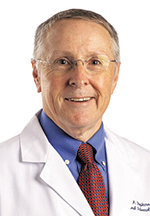
Should vaccinations be mandatory for healthcare workers? Not yet, said Robert Hopkins, MD, a University of Arkansas for Medical Science (UAMS) professor and division chief of internal medicine and a practicing internal medicine-pediatric physician who is also chair of the National Vaccine Advisory Committee.
Hopkins said failure to get vaccinated does reduce the level of protection for employees and all those they come in contact with. But much as he wants to see all healthcare workers vaccinated, he does not think mandatory vaccination is the right way to go until there is a fully approved vaccine under the usual FDA licensure process.
"Current vaccines are being used under an emergency use authorization which does not require as long a follow-up period as full licensure," Hopkins said. "Once we have licensed vaccines, I would be in support of mandatory vaccination of all healthcare workers."
As of late January, UAMS had administered vaccines to about 13,000 representing about 70 percent of its workforce including UAMS staff at Arkansas Children's Hospital and across their regional programs. More vaccination drives were underway and UAMS was expecting to reach 90 percent of its workforce very soon.
"Most employees I have spoken with have been excited and hopeful that they are taking a step toward better safety for themselves, their families and their patients, and toward an end to the pandemic," Hopkins said.
Some hospitals and other businesses are offering incentives such as gift certificates for their employees to get vaccinated. Hopkins said while there may be some increase in uptake with incentives, he sees those as ethically challenging in much the same way that a mandate would be with an authorized, but not approved, vaccine.
"I think the best way to increase uptake is to have open - ideally one-on-one or small group and best if face-to-face, despite the challenge of this in our pandemic - communication with those with concerns by local and trusted members of the healthcare community providing honest answers to their questions and concerns," Hopkins said. "I think it is also useful to emphasize the uptake of the vaccine by the hesitant person's peers and coworkers and to focus on the positive experiences of others who have been vaccinated."
As of late January, about 35 percent of the 1,555 employees at Jefferson Regional Medical Center had received the vaccine. That includes the hospital and all clinics, in and outside of Pine Bluff.
"After the first round of vaccines were given, we had more than 200 additional employees who requested it," said Jefferson Regional Director of Quality Management
Erin Bolton, RN. "We were able to vaccinate all of them by the 22nd of January. We continue trying to educate all our employees about the importance of the vaccine. At this time, we are moving ahead with community vaccination clinics."
Mitchell Nail, media relations manager, St. Bernards Medical Center, Jonesboro, said they have seen good vaccine acceptance from frontline healthcare workers.
"Seeing the devastating impacts of COVID-19 every day, most of our frontline healthcare workers eagerly received the vaccine," Nail said. "We administered more than 1,100 first doses before Christmas, and our employees often referred to the vaccine as an 'early Christmas present.' Nearly 2,000 of our employees were fully vaccinated by the end of January."
Nearly 8 percent of COVID cases in Arkansas have been healthcare workers. So, some frontline workers delayed getting the shot because of an active or recent COVID infection.
"As the prescribed waiting period shrank for a person recovering from COVID to receive the vaccine, more have signed up," Nail said. "Other team members have cited factors, such as health history as their reasons to wait. Because our sign-up is voluntary, we have encouraged those individuals to contact their doctors and follow their recommendations."
The vaccines have also been offered to support staff including those in maintenance and record keeping. Nail said that like many providers, they have encountered unfounded or anecdotal safety concerns among clinicians and non-clinicians alike.
"Universal screenings and masking as well as social distancing and good hygiene requirements protect unvaccinated persons within our premises, but high community spread continues to be our biggest problem," Nail said. "With limited vaccine doses for the foreseeable future, these prevention tools are important for the community as well."
Nail said St. Bernards prioritizes steady and consistent vaccine education that connects with patients, however long it takes.
"Because the COVID vaccines are new, the general public understandably craves information," he said. "If local healthcare providers--who often have the trust of their communities--do not consistently provide information about the vaccine's safety and effectiveness, patients will find information elsewhere, including sources without good data."
In addition, he thinks it is important that the process itself should convey confidence in the vaccine. A poor experience can translate into a poor view of the vaccine, and word-of-mouth travels quickly in the digital age.
"At St. Bernards, we have dedicated logistics teams to ensure patients have scheduled appointments and that we have the exact number of doses on hand," Nail said. "We believe all vaccine recipients should walk away from the experience with confidence in the care they've received."
For more information:


